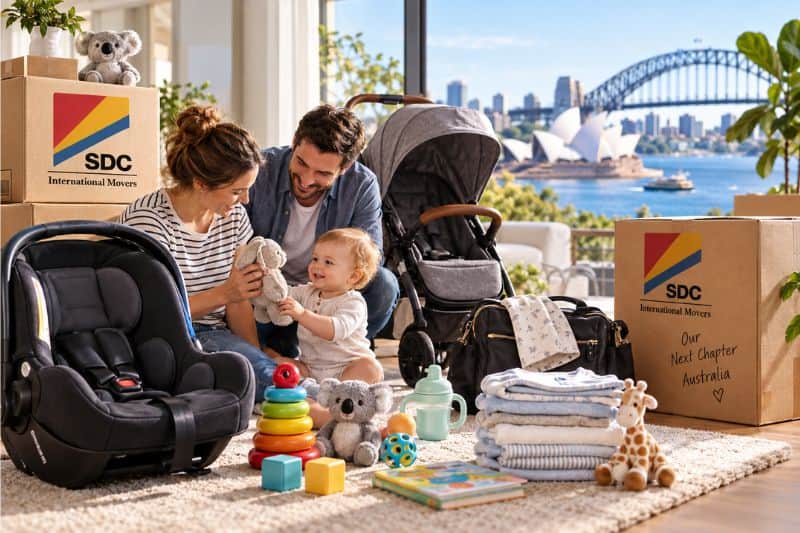
Packing a nursery is different from packing a living room. Every item is tied to a small person you are trying to keep safe, fed and asleep, and that makes moving baby gear to Australia feel higher stakes than moving a bookcase. The good news is that most of it comes down to a few clear rules. Some baby gear travels well, some should be sold before you go, and one item in particular, the car seat, will not be legal to use when you land. This page sorts baby gear and car seats for an Australia move so you know what to ship, what to replace and what to arrange before your first drive.
If you are relocating from the U.S. to Australia with a baby or toddler and want the whole picture first, start with our relocation guide, then come back here for the gear.
Can You Bring Your American Car Seat to Australia?
You should not plan on using your American car seat in Australia, because child restraints there must meet the Australian standard AS/NZS 1754, and seats bought overseas may not meet it and cannot legally be used.
American seats are certified to US federal standards, not to AS/NZS 1754. Australian authorities say the compliant seat carries a sticker on the shell showing the standard, and a seat without one is not a legal restraint, however safe or expensive it was in the States. In practice that means a premium convertible seat you love is, for driving purposes, a very costly piece of luggage. Leave it out of the container and out of your carry-on plans.
The rule matters from the first day. All children under seven must travel in an appropriate restraint, matched to their age and size and fitted correctly, so the airport trip itself needs a compliant seat. Rules on where children may sit in the car, and the finer details of age and stage, are set by each state or territory, so check the one you are moving to.
What Car Seat Do You Need in Australia, and How Do You Get It?
Buy or hire an Australian-approved seat that suits your child’s age and size, and sort it out before you land rather than after.
Australian retailers sell compliant seats in every stage, from rear-facing infant capsules through forward-facing seats to boosters, and fitting services are widely available so you are not left guessing about the belt path. For the first few days, many families hire a seat or buy one online for pickup, then choose a permanent seat once they know which car they are driving. If you plan to ship a vehicle, remember that the seat should be fitted to the car you actually drive here, and that fitting a new seat is often easier than adapting an old one.
Our car shipping to Australia page covers vehicles, which SDC International Shipping ships only inside a container alongside household goods. A car arriving by sea does not change the seat rule, but it does change the timing, so plan the seat for the airport trip and the first weeks separately from the car.
Should You Ship Your Crib, Cot or Bassinet?
Plan to buy an Australian cot or bassinet on arrival rather than ship your American crib, because infant sleep products in Australia are covered by a mandatory safety standard written for the Australian market.
The federal Infant Sleep Products Safety Standard covers household cots, folding cots and bassinets, and the transition period it allowed for cots has ended. Second-hand products are generally excluded, but the standard specifically reaches products imported second-hand. That wording is the reason to be cautious about shipping a used crib: it was built to US rules, and its status under the Australian standard is not something you want to find out at customs or the first time a retailer, a childcare provider or a visiting grandparent asks. Local cots are easy to find, and a compliant one removes the question.
Red Nose, Australia’s safe sleep organization, publishes safe sleeping guidance that differs in detail from American advice, so it is worth reading before you buy bedding and sleep gear. Whatever you choose, buy new from a retailer rather than relying on a second-hand cot of unknown origin.
Which Baby Gear Is Worth Shipping to Australia?
Soft goods and sturdy, simple gear usually earn their place in the container, while bulky items you can replace cheaply locally do not.
Strollers, High Chairs and Play Yards
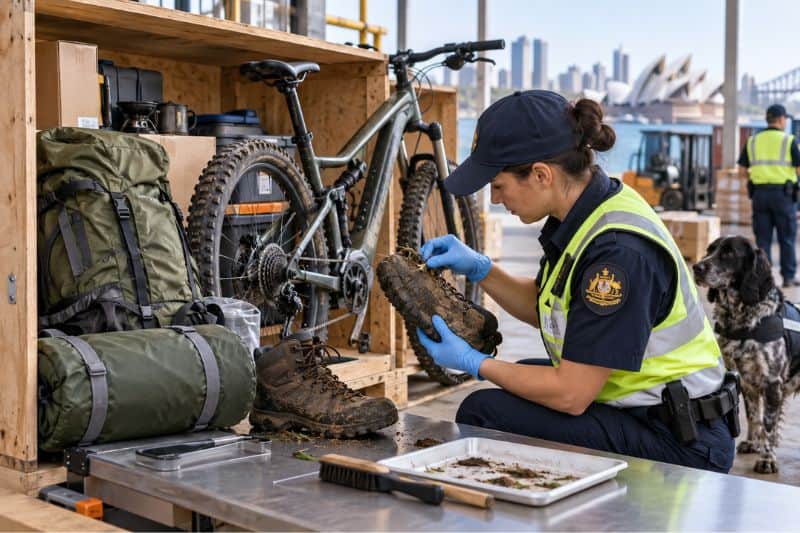
A good stroller is the item most families miss most, and it generally travels without drama. Australia has a mandatory safety standard for prams and strollers, so a recognizable, well-known brand is a safer bet than an obscure import. High chairs and play yards are worth comparing against the cost of a local replacement. Clean wheels, frames and fabric thoroughly before packing, since gear that has been outdoors, especially stroller wheels and anything used at parks or on trails, is the kind of item inspectors check.
Clothing, Books and Soft Goods
Clothing, blankets, books, baby carriers and cloth nappies ship easily and cost little space. Remember that Australian seasons run opposite to ours, so a baby born in December arrives in summer and needs lightweight layers while American hand-me-downs may be sized for snow. Pack by season, not just by size.
What to Carry on the Flight Instead of Shipping
Your container will not arrive for weeks, so the first stretch in Australia depends on what you carry. Pack a lightweight travel stroller or a baby carrier, a few days of clothing in the right season, any comfort items your child cannot sleep without, and the documents you will need, including passports and birth certificates. Anything your baby uses every day for the first month belongs in a suitcase, not in the container. A short list now saves a scramble at an Australian pharmacy on day two.
Which Baby Electronics Will Not Work on Australian Power?
Plug-in baby products built for American 120V power need a check before you ship, because Australia runs on 230V at 50Hz.
Baby monitors, sound machines, bottle warmers, sterilizers, breast pumps and nightlights are the usual suspects. Some are dual voltage and need only a plug adapter, and some are rated 120V only and will fail on Australian power. Look at the label on the adapter. Anything marked 100-240V works with an adapter, while 120V-only items are better replaced locally than run through a transformer in a nursery. Our guide to moving preparations for Australia covers the voltage check for the rest of the house as well.
What About Baby Food, Toys and Biosecurity Rules?
Leave baby food and formula behind, and clean every toy and piece of gear before it is packed, because Australian biosecurity rules treat a nursery like any other part of the house.
The Department of Agriculture, Fisheries and Forestry (DAFF) restricts most food, and that includes opened and unopened formula, pouches, snacks and dried goods. Buying them in Australia is simpler and removes a reason to hold your container. Wooden toys are assessed like other wooden items, plush toys and play mats that have been outdoors should be washed, and anything with soil or sand on it will be flagged. Our Australia import rules guide explains what DAFF looks for across a household shipment.
How SDC International Shipping Helps Families Ship Baby Gear
SDC International Shipping is a licensed FMC international moving company, and baby gear travels in the same household goods container as the rest of your move, from your door in the USA to your address in Australia. Our crews pack with export materials, you can read about it on our packing services page, and we list each item on the inventory that customs reads. One detail worth knowing: under the Transfer of Residence concession, used goods you have owned for at least 12 months generally enter free of duty and GST, and baby gear bought recently often falls outside that window. For the full scope of what we handle, see our Australia moving services.
If you are weighing a stroller against a replacement, or wondering about a particular monitor, call SDC at (877) 856-7050 and we will help you decide before you pack.
Frequently Asked Questions About Baby Gear and Car Seats for Australia
Can I use my American car seat in Australia?
No. Child restraints in Australia must meet the Australian standard AS/NZS 1754, and seats bought overseas may not meet it and cannot legally be used. Plan to buy or hire an Australian-approved seat before you arrive.
Do children need a car seat in Australia?
Yes. All children under seven must use an appropriate child restraint matched to their age and size and fitted correctly. State and territory rules cover the finer details, so check the rules for where you are moving.
Can I bring my baby’s crib to Australia?
It is better not to. Infant sleep products such as household cots, folding cots and bassinets are covered by a mandatory Australian safety standard, and the standard reaches products imported second-hand. Buying a compliant cot locally avoids the question.
Will my American baby monitor or breast pump work in Australia?
Only if it is dual voltage. Check the adapter label: 100-240V works with a plug adapter, while 120V-only devices will fail on Australia’s 230V supply and are best replaced locally.
Can I ship baby formula and baby food to Australia?
It is best not to. Australian biosecurity rules restrict most food, including formula, pouches and snacks, and a restricted item can hold up the whole container. Buy these supplies after you arrive.
Is a stroller worth shipping to Australia?
Often yes, since a stroller is bulky but simple and families miss a good one. Australia has a mandatory safety standard for prams and strollers, so stick to recognizable brands, and clean the wheels and frame thoroughly before packing.