You are not leaving the trails behind just because you are leaving the country. Australia has the Blue Mountains outside Sydney, the Grampians in Victoria, the Overland Track in Tasmania, and a coastline that rewards anyone with a tent and a free weekend. So the camping gear, hiking boots and bikes you own are worth thinking about before the move. The catch is that shipping camping gear, hiking boots and bikes to Australia means getting them past some of the strictest biosecurity inspectors anywhere, and outdoor equipment is exactly what those inspectors look at first.
This page explains why outdoor gear is singled out, how to clean each kind of item, what to put on your inventory and which pieces are worth the container space. If you are planning a move to Australia and want the full picture first, start there.
Why Does Australia Inspect Camping Gear and Hiking Boots So Closely?
Australia inspects outdoor gear closely because anything used outside can carry soil, seeds, plant matter and insects, and Australia relies on its border as the main defense for an ecosystem that evolved in isolation.
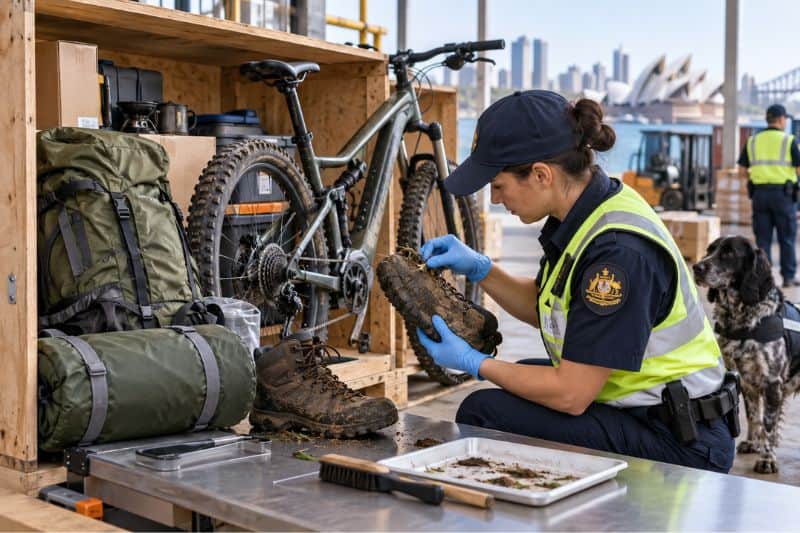
The Department of Agriculture, Fisheries and Forestry (DAFF) enforces those rules on every household shipment. A pair of boots that crossed a muddy trail last autumn, a tent that was packed away damp after a lakeside weekend, a bike that spent a summer on a rack under trees: each can hold a seed or an egg case that you cannot see. Inspectors know that, so camping equipment, hiking footwear, sports gear and bicycles get a harder look than a box of books.
The consequence of failing is practical, not abstract. An item that is found dirty can be cleaned or treated, and in serious cases rejected, and the bill goes to you. A container held for a clean-up also sits at the port while it waits. All of that is avoidable with an hour of work per item before the packers arrive.
How Do You Clean Hiking Boots for Australian Biosecurity?
Clean hiking boots by removing every trace of soil, mud, seeds and plant material from the outsole, the upper and the laces, then letting them dry completely before they go in a box.
Treads, Eyelets and Hook-and-Loop Straps
Start with the treads, where packed mud hides. A stiff brush and a stick or old screwdriver will free the clay from deep lugs. Then work through the eyelets, the tongue gusset and any hook-and-loop closures, because burrs and grass seeds cling to those like they were designed for it. Pull the laces out and wash or replace them. Rinse the boots under running water, scrub with a brush and mild soap, and dry them in a warm room rather than in direct heat that could crack the leather.
Packs, Gaiters and Outdoor Clothing
Treat backpacks, gaiters and trekking poles the same way. Empty every pocket, turn the pack inside out, vacuum the seams and wash off the base. Check the tips of trekking poles and the baskets for packed dirt. A rain jacket or fleece that has been through brush deserves a wash before it is packed, since seeds work into the fabric as readily as they do into laces.
Finally, inspect everything in daylight. If you can see soil, an inspector can too, and a quick photograph of each cleaned item gives you a record if a question comes up later.
How Do You Prepare a Tent, Sleeping Bag and Other Camping Equipment?
Set the tent up, clean it, dry it fully and pack it away only when it is spotless, because tent floors, pegs and poles collect more organic material than any other camping item.
Pitch the tent in the yard or a garage and go over the floor, the seams, the guy lines and the pegs. Sand from beach camping counts too, since sand, like soil, cannot be imported. Wipe the poles, especially the ends and the joints, and shake out every stuff sack. Drying matters twice over: a tent packed damp will grow mildew during a voyage that lasts weeks, and moisture can hide organic residue.
Sleeping bags, pads and camp chairs follow the same pattern. Wash or spot-clean the bag according to its label, and make sure it is dry through the fill. Many bags and jackets use down, and feathers must be declared, so list down-filled items by name on your inventory rather than lumping them in. Cooking gear needs scrubbing, and stoves should be free of residue. Gas canisters and fuel bottles are dangerous goods and are best left behind or used up, so ask your coordinator before packing anything that held fuel.
What Should You Do Before Shipping a Bike to Australia?
Before shipping a bike to Australia, wash the entire frame and drivetrain, remove every trace of soil and plant matter, and have it packed so it cannot shift or rub for weeks.
Most of a bike’s biosecurity risk lives in places you do not usually clean. The tire treads pack with dirt, the cassette and chainrings hold grit and grass, the underside of the saddle and the frame’s shaded joints collect mud, and the cleats on your shoes carry clay. Degrease the chain, scrub the tires and rims, and wash the shoes you ride in as carefully as hiking boots. Bike racks and trainers deserve the same attention.
Mechanics also matter. Remove the pedals, turn or lower the handlebars and take off the wheels so the bike fits a bike box or crate, and pad the frame where it will touch other items. If you ride an e-bike, remember that its battery contains lithium and is treated as dangerous goods, so ask your coordinator what can travel in the container.
Which Outdoor Gear Is Worth Shipping, and What Should You Buy in Australia?
Ship gear that is expensive, broken in or hard to find, and replace the cheap, bulky or climate-specific items after you land.
Well-worn hiking boots that fit perfectly, a premium down bag, a carefully built bike and a tent you trust are all worth a place in the container, since a replacement has to be found, fitted and broken in. Basic camp furniture, cheap tarps, bulky coolers and anything stained beyond cleaning are better sold before you leave. Australia has plenty of outdoor retailers, including Kathmandu, Anaconda and BCF, so you will not be short of options once you arrive.
Think about conditions too. Gear built for Colorado snow may be overbuilt for a Queensland summer, and Australian seasons run opposite to American ones, with summer from December through February. A three-season tent and a light layering system will serve you across most of the country, while the Tasmanian highlands and alpine areas of Victoria and New South Wales still call for proper cold-weather kit.
How Should You List Outdoor Gear on Your Inventory?
List every piece of outdoor gear as its own line with a description and approximate age, rather than writing a vague line such as camping gear.
The inventory and the B534 declaration work together. The B534 is the Unaccompanied Personal Effects Statement, you sign it yourself, and it is read alongside your packing list to decide how much of the shipment is inspected. A line reading boots, hiking, 6 years old gives an officer something to assess. A line reading miscellaneous outdoor items invites a closer look. Our Australia customs forms page explains the form in full.
Age matters for duty too. Under the Transfer of Residence concession, used goods you have owned and used for at least 12 months generally enter free of duty and GST, so a tent bought a month before the move may not qualify. For the wider rules on what DAFF allows across a household shipment, see our Australia import rules guide.
How SDC International Shipping Packs and Ships Outdoor Gear
SDC International Shipping is a licensed FMC international moving company, and outdoor gear travels as part of your household goods container from your door in the USA to your address in Australia. Our crews pack with export materials, our packing services include an itemised inventory, and our Australian partners manage customs and biosecurity at the port. Sea freight timelines are on our sea freight to Australia page, with 7 to 13 weeks from the West Coast and 6 to 12 weeks from the East Coast for the voyage itself.
Bikes, tents and boots are exactly the kind of item we like to hear about early, because a ten-minute conversation before you clean and pack is cheaper than a hold at the port. For an overview of the full process, see moving from the U.S. to Australia with SDC, then call (877) 856-7050 and tell us what is in your gear closet.
Frequently Asked Questions About Shipping Camping Gear, Boots and Bikes to Australia
Can I bring hiking boots and camping gear to Australia?
Yes. Hiking boots, tents, sleeping bags and other camping equipment can come in a household goods shipment, provided they are completely clean and free of soil, seeds, sand and plant material. They are inspected more closely than most items, so cleaning before packing is essential.
How do I clean hiking boots for Australian customs?
Brush the mud out of the treads, clear the eyelets, tongue and hook-and-loop straps of seeds and burrs, and wash the boots and laces with water and mild soap. Let them dry completely in a warm room, then inspect them in daylight before packing.
Can I ship my bicycle to Australia?
Yes, in a household goods container. Wash the frame, tires, cassette and chainrings thoroughly, remove pedals and wheels so it packs safely, and list it on your inventory. An e-bike’s lithium battery is dangerous goods, so ask your coordinator how to handle it.
What happens if my tent or boots fail biosecurity inspection?
DAFF can require the item to be cleaned or treated, and in serious cases rejected, usually at your expense. A container can also be held at the port while this happens, which is why cleaning at home is far cheaper.
Do I need to declare my camping gear on the B534?
Yes. List each item on your inventory, and declare down-filled gear by name. Items you have owned and used for at least 12 months generally qualify for duty and GST relief under the Transfer of Residence concession.
Can I pack camping fuel or gas canisters in my shipment?
No, it is best not to. Fuel canisters and fuel bottles are dangerous goods, so use them up or leave them behind and buy fresh supplies in Australia. Ask your SDC coordinator before packing any stove that has held fuel.